20:05 Friday, 29 May 2026 (GMT+5)

- No results found
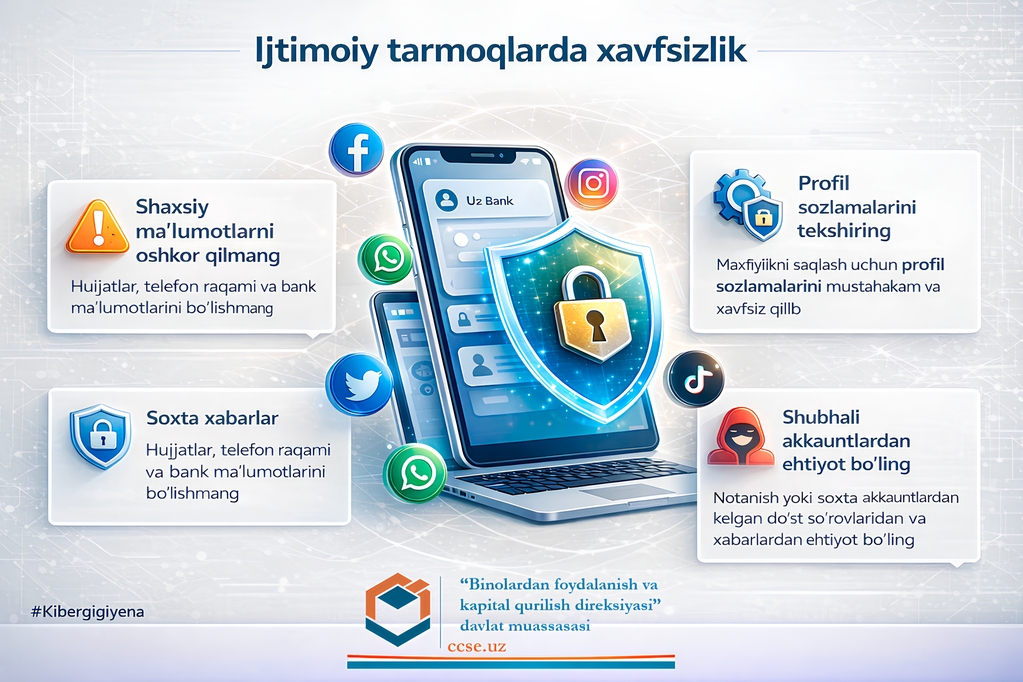
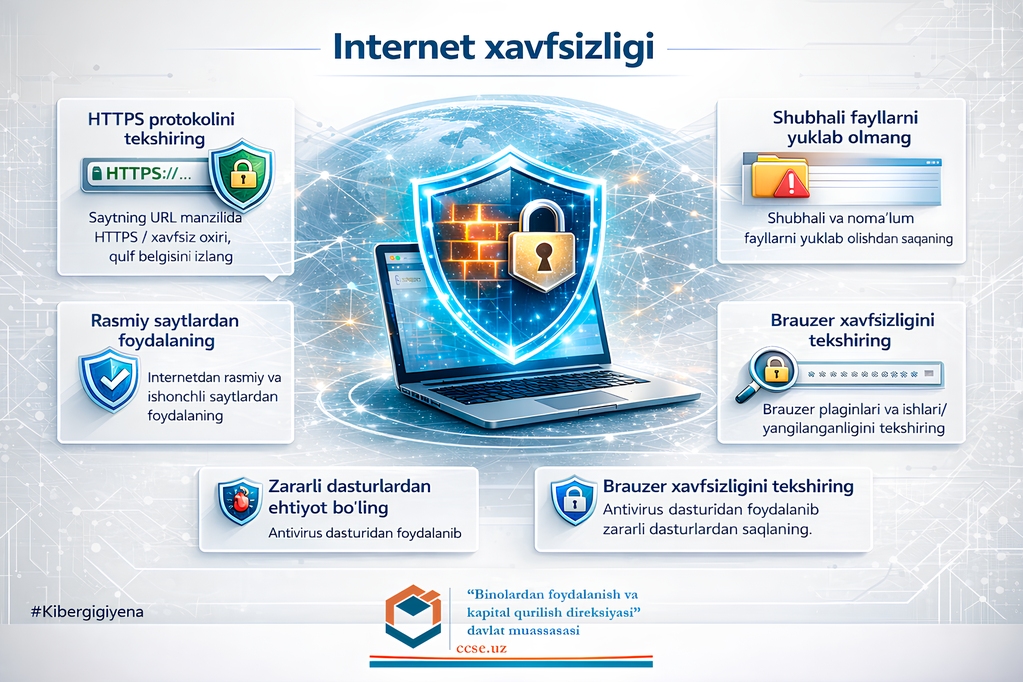
Today, the internet and digital technologies have become an integral part of society. Public services, banking operations, online trade, education, and communication processes are increasingly transitioning into the digital environment. While this creates significant convenience for people, it also leads to the emergence of new cyber threats.
In recent years, cybercrimes such as online fraud, phishing attacks, theft of personal data, and hacking of accounts have been increasing. In order to protect against such threats, it is important for every user to follow the rules of cyber hygiene.
What is Cyber Hygiene?
Cyber hygiene refers to a set of simple yet essential rules aimed at ensuring security while using the internet and digital devices. Adhering to these rules helps protect users’ personal information and financial resources.
Basic Rules of Cyber Hygiene
To ensure security in the digital environment, it is recommended to follow these guidelines:
Use strong passwords. A password should consist of at least 12 characters and include uppercase and lowercase letters, numbers, and special symbols.
Enable two-factor authentication. This provides an additional layer of protection when accessing accounts.
Do not open suspicious links. Unknown links received via email, SMS, or social media may be fraudulent.
Protect personal information. Bank card details, PIN codes, and SMS verification codes must never be shared with anyone.
Regularly update software. System and application updates help eliminate security vulnerabilities.
Use antivirus software. Antivirus programs help detect and block malicious software.
What Should Be Done in Case of a Cyber Incident?
If you encounter fraud or any suspicious activity, the following measures should be taken:
Contact your bank immediately. If unknown transactions are made using your bank card, promptly contact your bank and request the card to be blocked.
Change passwords immediately. If an account has been compromised, it is recommended to update all passwords and enable two-factor authentication.
Report to law enforcement authorities. In cases of cyber fraud, it is necessary to contact the internal affairs authorities. When filing a report, it is important to provide phone numbers, messages, or transaction details related to the fraud.
Share: